Posts

Showing posts with the label student

Fasting

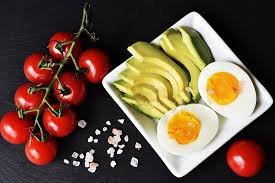
Fasting is the practice of going without food for a period of time.  People engage in fasting for health and religious reasons.  Today, on the Integrated Pharmacist podcast, we're talking about the effects of fasting on human health. The goals for fasting might include weight reduction, toxin elimination, better mental clarity, improved cardiovascular health, blood sugar control, and even improved cancer treatments. There are multiple ways to fast.  Intermittent fasting includes limiting food consumption to an 8 hour period every day.  Some people go without any food or water for 24 hours.  Some fasts include water and may extend the fast to 48 hours.  Still others consider fasting for as long as 21 days while on a liquid-only diet.  This type of diet typically includes vegetable juices or some other way of providing the body with essential vitamins and minerals while keeping caloric intake to about 250 to 350 a day. Although many people have found ...
Enzyme Therapy

Image
***Disclaimer: This blog is not meant to be used as legal or medical advice.  It is written as my person perspective on how medical professionals could blend western medicine with other modalities*** A growing number of people are developing sensitivity to gluten without having celiac disease.  Is there something they can do to improve these negative symptoms?  This week on the Integrated Pharmacist Podcast, we're talking about Enzyme Therapy.  This approach to health recognizes that foods we eat can affect overall health.  Enzymes throughout the body can help certain chemical processes happen.  If the right ones are administered, food can potentially be digested even better.  This could lead to healthier guts and bodies.  We already practice this in western medicine.  We have medications that are concentrated pancreatic enzymes.  These are typically given to patients whose pancreas does not work optimally such as in cystic fibrosis ...

Electroacupuncture

Image
***Disclaimer: This blog is not meant to be used as legal or medical advice.  It is written as my person perspective on how medical professionals could blend western medicine with other modalities*** Welcome to this week's episode of The Integrated Pharmacist Podcast.  In episode 2, I discussed the benefits of acupuncture.  Many studies have demonstrated its effects on pain.  In more recent years, therapists have added mild currents of electricity to acupuncture to enhance the healing effects.  Even though acupuncture has a lot of clincal evidence by itself, some patients and therapists are still hesitant to use this therapy.  Because the acupuncture needles penetrate the skin, there are some complications with blood exposure, sanitation, and potentially breaking needle tips in the skin.  For these people, a new form of acupuncture was created.  Dr. Clyde Shealy an American neurosurgeon was credited with inventing a machine in 1974 that cou...

Diet

Image
***Disclaimer: This blog is not meant to be used as legal or medical advice.  It is written as my person perspective on how medical professionals could blend western medicine with other modalities*** Greetings, and welcome to another episode of the Integrated Pharmacist Podcast.  Fad diets come and go.  So often, they're built on extreme limitations with the goal of dropping weight quickly or offering longer, more vibrant life.  These fad diets came into being during the 19th century when people drifted culturally away from ethnic and locally grown foods to diets based more on comfort and pleasure.  This new style of eating obviously had a negative effect on health and wellness, so new diet trends continue to spring up.  Extreme diets have included low-fat, low-carb, high fiber, and high protein.  There have been diets based on specific foods or food-groups like cabbage and grapefruit, restrictive diets, liquid diets, and much more. Of course, fad ...

Colonic Therapy

Image
***Disclaimer: This blog is not meant to be used as legal or medical advice.  It is written as my person perspective on how medical professionals could blend western medicine with other modalities*** Gut health is a growing topic in the medical community.  With emerging evidence about the gut microbiome, scientists and doctors are reevaluating how we treat the gut.  Today on The Integrated Pharmacist Podcast, I'm going to discuss colonic therapy.  Historically, pharmacy walls were lined with elixirs, formulas, and herbs meant to treat diarrhea and constipation.  Even today, we have medication that help use evacuate our bowels such as Magnesium Citrate and MiraLax.  Intuitively, we recognize the danger of not being able to defecate.  If constipation is left untreated, it can lead to bowel impaction which is where the stool becomes so big or hard that the bowels are unable to pass it on their own.  If impaction is not treated, it can lead to s...

Chiropractic

Image
***Disclaimer: This blog is not meant to be used as legal or medical advice. It is written as my person perspective on how medical professionals could blend western medicine with other modalities*** How many of you have ever stretched your back or neck and had those spinal joints crack and pop?  Have you noticed how you feel afterward?  Today on The Integrated Pharmacist Podcast, we're talking about chiropractic therapy.  Literally translated "Done by Hand", this includes the physical manipulation of the body to promote health.  It focuses primarily on the spine as a key element to total-body health.  The main belief is that by realigning the vertebrae, the nerves are better able to function.  When nerves operate optimally, the body can better heal itself.  The communication channels for self healing are open.  When the vertebrae are misaligned, those nerves get pinched and become poor signal transmitters.  These misalignments...

Chelation Therapy

Image
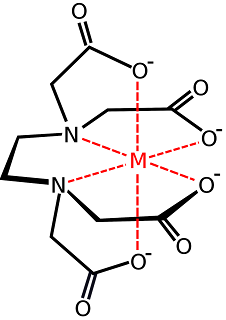
***Disclaimer: This blog is not meant to be used as legal or medical advice.  It is written as my person perspective on how medical professionals could blend western medicine with other modalities*** Welcome to another exciting episode of The Integrated Pharmacist Podcast!  Today's topic is chelation therapy.  Chelation is the process of binding heavy metals in order to flush them out of a system.  This was originally performed in pipes.  This is the traditional method of water softening created in 1930.  During World War II, the University of Oxford used the chemical ethylene-di-amine-tetra-acetic acid (or EDTA) to combat lewisite - a chemical weapon that uses arsenic.  Since then, the same chemical has been used to treat lead and mercury poisoning.  In the 1950's, it was used on a large group of battery factory workers, again for lead poisoning.  However, the doctor discovered that patients who had previously experienced angina no longer...

Cell Therapy

Image
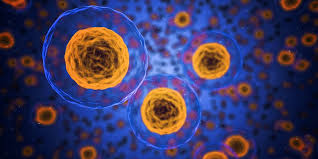
***Disclaimer: This blog is not meant to be used as legal or medical advice.  It is written as my person perspective on how medical professionals could blend western medicine with other modalities*** Greetings and welcome to another episode of the Integrated Pharmacist Podcast.  Today I'd like to talk to you about cell therapy.  This modality involves the injection of healthy cells in order to promote healing in a sick patient.  Western medicine has accepted this method at least to a small degree.  Most people have heard of a bone marrow transplant.  This is an example of cell therapy practiced in western medicine. In its early days, cell therapy included injecting healthy, mature cells specific to the injured site.  For example, a heart patient might get healthy heart cells - this could be from a deceased human donor.  The claim is that these cells would be injected and make their way to the heart and help the body rebuild heart ...

Biological Dentistry

***Disclaimer: This blog is not meant to be used as legal or medical advice.  It is written as my person perspective on how medical professionals could blend western medicine with other modalities*** Today's topic is biological dentistry.  This may sound like a misnomer at first.  All dentists work on biological patients, right?  This term refers specifically to dentists who recognize dental work and the mouth as an important part of the whole body.  These dentists also call themselves holistic or integrated dentists.  From what I have found, there is a strong emphasis on how issues in the mouth can affect the entire body. This outlook makes sense to me, because the mouth is like a gate to the rest of the body.  If you think about it, we really only have two holes that are built to allow something into the cavity of the human - the nose and the mouth.  If we allow foreign objects to sit in the mouth, it doesn't take too much effort for it to get...

Biofeedback

Image
***Disclaimer: This blog is not meant to be used as legal or medical advice.  It is written as my person perspective on how medical professionals could blend western medicine with other modalities*** Today, I'd like to talk about biofeedback.  This is an approach to healing that connects the patient with a monitoring system.  As unconscious processes are relayed to the patient in real time, the patient makes conscious adjustments to make the unconscious process come into a healthier range.  What does this look like?  A simple example would be heart rate.  A biofeedback practitioner connects a heart monitor to a patient who suffers from anxiety.  The machine reflects back to the patient any changes in heart rate that occur as it is happening.  The biofeedback practitioner might guide the patient to do things that will cause relaxation such as meditation or deep breathing exercises.  The patient knows what actions work based on real time fe...

Aromatherapy

Image
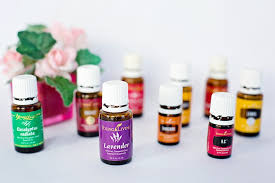
***Disclaimer: This blog is not meant to be used as legal or medical advice.  It is written as my person perspective on how medical professionals could blend western medicine with other modalities*** Aromatherapy is a rather broad topic.  This is a modality that I engage in and was happy to research.  It includes such a variety of products, that this will be a topic I come back to in the future. Technically, it includes using aroma as medicine; however, it is generally agreed within typical users that it refers specifically to the volatile or essential oils of a variety of products.  The proposed (and not well understood) mechanism of action is that the inhaled chemicals enter the blood stream through the lungs or trigger synapses in the nose which relay directly with the limbic system in the brain.  We do know that the nerves associated with the sense of smell route directly into the brain without going through the brain stem.  We also kn...

Ayurveda

Image
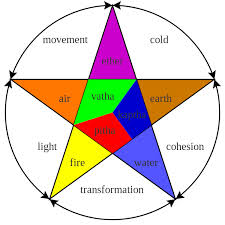
***Disclaimer: This blog is not meant to be used as legal or medical advice.  It is written as my person perspective on how medical professionals could blend western medicine with other modalities*** Ayurveda is the tradition of medicine that stems from ancient India.  As I mentioned in a previous post, there is an emphasis on one's dosha which is determined by body shape, activity, personality, and attitude.  Interventions are often tailored to the patient's dosha .  The tradition covers many aspects of medicine including surgery, but upholds the value of preventative medicine, and views strength as the ability to endure extremes.  Yoga is another big part of Ayurveda worth it's own blog post.  In this post, I'm going to focus on the herbs associated with Ayurvedic medicine. Because this is such a broad sweeping modality, it is difficult to define everything it should or should not be used for.  Like my recent post on aromatherapy, this is a subj...