Posts

Showing posts with the label placebo

Elderberry

Image
Greetings, listeners!  Welcome to another episode of the integrated pharmacist podcast.  Today I'd like to share with you one of my favorite herbal medications - the elderberry.  With the current COVID-19 pandemic causing socioeconomic upheaval, people are scrambling for some miracle product that will prevent themselves from getting the dreaded disease.  From disinfectants and face-masks to unproven medications, very little seems to be off the table at his point. Elderberry has taken some spotlight in all of this, because of its history of use in other viral infections.  Research suggests one of it's effects is similar to the human hormone interferon.  Interferon is a chemical that virus-infected cells release that helps prevent neighboring cells from getting infected.  The in-vitro trial I refer to demonstrates mostly late-stage activity against influenza virus infection as well as immune response activation to up-regulate specific cytokines dur...
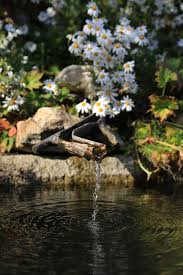
Bach Flower Remedies

Image
How do flowers make you feel?  How do emotions effect our health?  Today on the Integrated Pharmacist Podcast, we're talking about a very specific therapy derived from flowers.  Bach Flower Remedies were created in the 1930s by an English scientist named Edward Bach.  This flower therapy is based on two beliefs: the homeopathic idea that dilution makes the treatment stronger; and the metaphysical idea that thoughts and feelings can manifest as physical problems.  Bach believed the essence of flowers was released by the rays of the sun in natural spring water.  Preparations of Bach Flower Remedies involve either collecting dew off of flowers, infusing water with flower essence while exposed to 3 hours of sunlight, or potentially by boiling for a short time in spring water.  Brandy is then added to enhance the medicinal effects of the infusion.  Each of these preparations are designed to infuse the spring water with the energy of the flower invo...

Fasting

Fasting is the practice of going without food for a period of time.  People engage in fasting for health and religious reasons.  Today, on the Integrated Pharmacist podcast, we're talking about the effects of fasting on human health. The goals for fasting might include weight reduction, toxin elimination, better mental clarity, improved cardiovascular health, blood sugar control, and even improved cancer treatments. There are multiple ways to fast.  Intermittent fasting includes limiting food consumption to an 8 hour period every day.  Some people go without any food or water for 24 hours.  Some fasts include water and may extend the fast to 48 hours.  Still others consider fasting for as long as 21 days while on a liquid-only diet.  This type of diet typically includes vegetable juices or some other way of providing the body with essential vitamins and minerals while keeping caloric intake to about 250 to 350 a day. Although many people have found ...

Electroacupuncture

Image
***Disclaimer: This blog is not meant to be used as legal or medical advice.  It is written as my person perspective on how medical professionals could blend western medicine with other modalities*** Welcome to this week's episode of The Integrated Pharmacist Podcast.  In episode 2, I discussed the benefits of acupuncture.  Many studies have demonstrated its effects on pain.  In more recent years, therapists have added mild currents of electricity to acupuncture to enhance the healing effects.  Even though acupuncture has a lot of clincal evidence by itself, some patients and therapists are still hesitant to use this therapy.  Because the acupuncture needles penetrate the skin, there are some complications with blood exposure, sanitation, and potentially breaking needle tips in the skin.  For these people, a new form of acupuncture was created.  Dr. Clyde Shealy an American neurosurgeon was credited with inventing a machine in 1974 that cou...

Chelation Therapy

Image
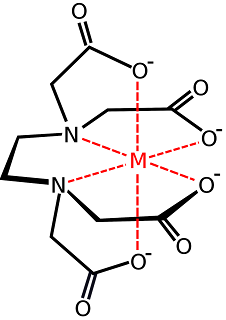
***Disclaimer: This blog is not meant to be used as legal or medical advice.  It is written as my person perspective on how medical professionals could blend western medicine with other modalities*** Welcome to another exciting episode of The Integrated Pharmacist Podcast!  Today's topic is chelation therapy.  Chelation is the process of binding heavy metals in order to flush them out of a system.  This was originally performed in pipes.  This is the traditional method of water softening created in 1930.  During World War II, the University of Oxford used the chemical ethylene-di-amine-tetra-acetic acid (or EDTA) to combat lewisite - a chemical weapon that uses arsenic.  Since then, the same chemical has been used to treat lead and mercury poisoning.  In the 1950's, it was used on a large group of battery factory workers, again for lead poisoning.  However, the doctor discovered that patients who had previously experienced angina no longer...

Cell Therapy

Image
***Disclaimer: This blog is not meant to be used as legal or medical advice.  It is written as my person perspective on how medical professionals could blend western medicine with other modalities*** Greetings and welcome to another episode of the Integrated Pharmacist Podcast.  Today I'd like to talk to you about cell therapy.  This modality involves the injection of healthy cells in order to promote healing in a sick patient.  Western medicine has accepted this method at least to a small degree.  Most people have heard of a bone marrow transplant.  This is an example of cell therapy practiced in western medicine. In its early days, cell therapy included injecting healthy, mature cells specific to the injured site.  For example, a heart patient might get healthy heart cells - this could be from a deceased human donor.  The claim is that these cells would be injected and make their way to the heart and help the body rebuild heart ...

Bodywork

Image
***Disclaimer: This blog is not meant to be used as legal or medical advice.  It is written as my person perspective on how medical professionals could blend western medicine with other modalities*** Greetings, listeners, and welcome to another episode of The Integrated Pharmacist Podcast.  This week, I'm discussing bodywork.  This is the complementary/alternative modality that has garnered the most acceptance and usage.  It includes physical manipulation such as massage therapy and reflexology, movement therapy such as qigong, yoga and ti chi, and energy work such as reiki and therapeutic touch.  Although it is a diverse set of modalities, I'd like to touch upon one in each of these three categories. Physical manipulation comes naturally to many people as a mode of self care and home care.  After a long day on your feet, it feels good to get a nice foot rub.  When our muscles develop knots, human touch makes the pain more bearable.  Positive ...

Biological Dentistry

***Disclaimer: This blog is not meant to be used as legal or medical advice.  It is written as my person perspective on how medical professionals could blend western medicine with other modalities*** Today's topic is biological dentistry.  This may sound like a misnomer at first.  All dentists work on biological patients, right?  This term refers specifically to dentists who recognize dental work and the mouth as an important part of the whole body.  These dentists also call themselves holistic or integrated dentists.  From what I have found, there is a strong emphasis on how issues in the mouth can affect the entire body. This outlook makes sense to me, because the mouth is like a gate to the rest of the body.  If you think about it, we really only have two holes that are built to allow something into the cavity of the human - the nose and the mouth.  If we allow foreign objects to sit in the mouth, it doesn't take too much effort for it to get...

Biofeedback

Image
***Disclaimer: This blog is not meant to be used as legal or medical advice.  It is written as my person perspective on how medical professionals could blend western medicine with other modalities*** Today, I'd like to talk about biofeedback.  This is an approach to healing that connects the patient with a monitoring system.  As unconscious processes are relayed to the patient in real time, the patient makes conscious adjustments to make the unconscious process come into a healthier range.  What does this look like?  A simple example would be heart rate.  A biofeedback practitioner connects a heart monitor to a patient who suffers from anxiety.  The machine reflects back to the patient any changes in heart rate that occur as it is happening.  The biofeedback practitioner might guide the patient to do things that will cause relaxation such as meditation or deep breathing exercises.  The patient knows what actions work based on real time fe...

Ayurveda

Image
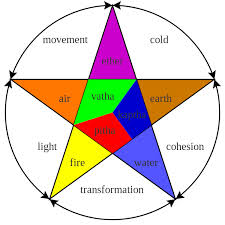
***Disclaimer: This blog is not meant to be used as legal or medical advice.  It is written as my person perspective on how medical professionals could blend western medicine with other modalities*** Ayurveda is the tradition of medicine that stems from ancient India.  As I mentioned in a previous post, there is an emphasis on one's dosha which is determined by body shape, activity, personality, and attitude.  Interventions are often tailored to the patient's dosha .  The tradition covers many aspects of medicine including surgery, but upholds the value of preventative medicine, and views strength as the ability to endure extremes.  Yoga is another big part of Ayurveda worth it's own blog post.  In this post, I'm going to focus on the herbs associated with Ayurvedic medicine. Because this is such a broad sweeping modality, it is difficult to define everything it should or should not be used for.  Like my recent post on aromatherapy, this is a subj...